
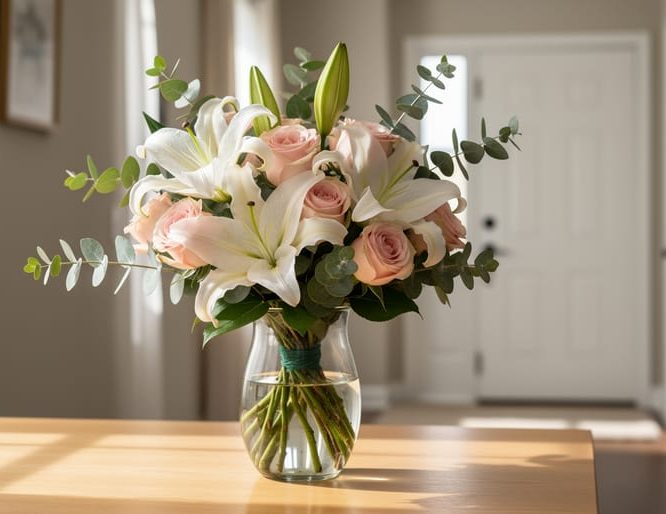
When someone you care about experiences loss, sympathy flowers offer a tangible way to express what words often cannot: that you’re thinking of them, that their grief matters, and that they aren’t alone. Choosing the right arrangement means understanding both practical details (delivery windows, appropriate styles, where to send them) and the deeper question of how flowers can genuinely comfort during life’s hardest moments.
In 2026, sending sympathy flowers has become more accessible and thoughtful than ever. Same-day delivery is widely available across Canada when you order before 2 PM, with arrangements hand-delivered directly to funeral homes, churches, or the family’s home. You’ll find options ranging from traditional standing sprays for the service itself to peace lilies and living plants that offer lasting comfort in the weeks that follow.
But here’s what matters most: the flowers you choose carry meaning far beyond their petals. A standing spray at the funeral home honors the person who’s passed. A bouquet sent to the family’s home three weeks later reminds them they’re still held in your thoughts when the crowds have dispersed and the silence feels heaviest.
This guide walks you through selecting sympathy flowers with both heart and practicality. You’ll learn which arrangements suit different relationships and settings, how to navigate cultural traditions with respect, what to write on the card when you’re not sure what to say, and how choosing locally grown, sustainably sourced flowers can turn your gesture into support for your community during a moment when connection matters most.
Why Sympathy Flowers Matter More Than You Think
When someone we care about is grieving, we often feel paralyzed by the impossibility of making things better. We search for words that don’t exist, gestures that feel adequate to the weight of loss. This is precisely where sympathy flowers step in, doing work that language cannot.
Flowers create an immediate visual softness in spaces suddenly made stark by absence. A home dealing with death becomes filled with logistics, difficult phone calls, and reminders of what’s missing. An arrangement of fresh blooms offers a living counterpoint to all that heaviness. It gives the eye somewhere gentle to rest. There’s comfort in tending to something beautiful when everything else feels broken, changing the water, trimming stems, watching petals unfold over days.
But sympathy flowers do more than decorate grief. They represent continuity and renewal during a time when life feels permanently altered. Their natural cycle, budding, blooming, eventually fading, mirrors the mourning process itself. They acknowledge that life persists even as we hold space for loss.
A florist I know in our community once shared how she’s watched families return weeks after a funeral, telling her that the flowers became a focal point for sharing memories, that visitors would gather around the arrangement while telling stories about the person they’d lost.
The flowers created a gentle gathering place for remembrance.
Historically, flowers have bridged the gap between the living and the dead across cultures. Ancient Greeks placed them on graves. Victorians developed entire floral languages to express sentiments too tender or painful for words. That tradition endures because it works. When you send sympathy flowers, you’re doing something that transcends the transactional. You’re placing beauty in darkness. You’re saying, without speaking, “I’m holding you in my heart during this impossible time.”
And perhaps most importantly, you’re showing the bereaved they’re not alone. Each delivery becomes tangible proof that their community surrounds them, that others remember and care. The flowers themselves may fade, but that message of solidarity lingers.
Understanding Different Types of Sympathy Arrangements
Bouquets and Vase Arrangements for the Home
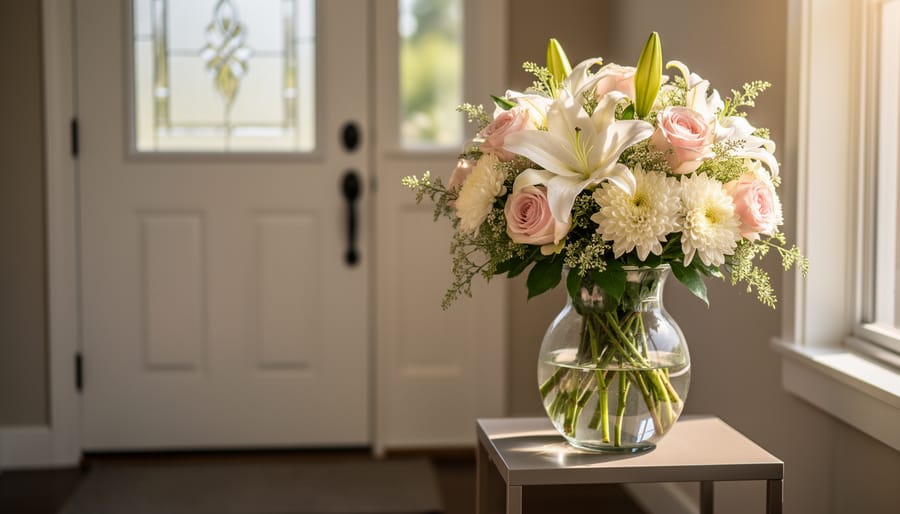
Traditional sympathy bouquets delivered to the home offer quiet, ongoing comfort during the raw first days and weeks of grief. Unlike larger funeral arrangements, these softer, more intimate bouquets nestle into the spaces where families gather, on kitchen tables, living room mantels, bedside tables, becoming gentle companions in everyday moments when loss feels heaviest.
A well-chosen vase arrangement needs nothing from the recipient except perhaps a little water. That matters when even small tasks feel overwhelming. Classic options include all-white bouquets of lilies and roses that bring peaceful elegance, or soft mixed arrangements with pastels that add warmth without demanding attention. Many families appreciate receiving several smaller bouquets over time rather than one large delivery, extending that sense of being held by community.
Peace lilies deserve special mention here. These graceful plants arrive already potted, their white blooms rising like quiet prayers above dark green leaves. They ask little care, tolerate low light, and keep growing long after cut flowers have faded, a living reminder that support continues beyond the funeral. For families who find comfort in tending something alive, a peace lily or similar sympathy plant becomes part of the healing space itself, rooting care in daily ritual.
Standing Sprays and Funeral Service Flowers
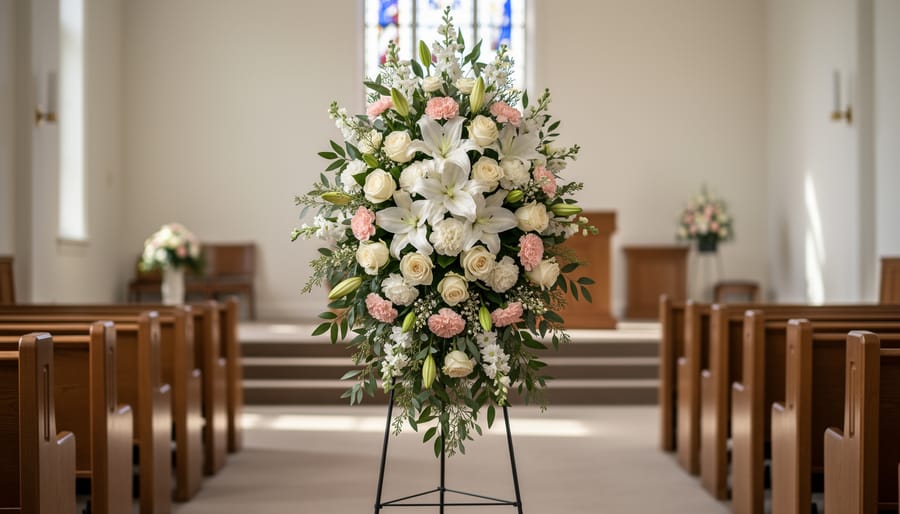
Standing sprays command attention in ways smaller arrangements cannot. These tall, easel-mounted displays create a focal point at funeral services, visually honoring the deceased while offering comfort to everyone gathered. They’re designed specifically for funeral homes, churches, and memorial venues, not for home delivery, making them the traditional choice when you want to contribute directly to the service atmosphere.
The visual impact matters during these moments. A well-crafted standing spray frames the ceremony space with color and life, providing something beautiful for mourners to rest their eyes on during the hardest hours. They typically feature long-stemmed flowers arranged in dramatic vertical or fan shapes, often incorporating lilies, roses, gladioli, and greenery that creates depth and texture.
Send standing sprays when you want your tribute publicly displayed at the service itself. They’re especially appropriate from organizations, colleagues, or extended family members who may not have a close connection to the immediate household but want to show respect. In Canada, these arrangements can be hand-delivered directly to funeral homes, churches, or cemeteries, many florists offer same-day service if you order by 2 pm or 3 pm, ensuring your flowers arrive in time for the visitation or ceremony.
Plants That Keep Growing
Living plants carry a different kind of comfort than cut flowers, they continue growing, offering a gentle reminder that life persists even through grief. A peace lily or a small potted orchid doesn’t wilt and fade in days. Instead, it becomes a lasting presence in the home, something the bereaved can tend to as they navigate their own healing. Each new leaf or bloom becomes a quiet symbol of memory and renewal.
For grieving families, plants are also wonderfully forgiving. They don’t demand immediate attention during those first overwhelming days when even basic tasks feel impossible. A hardy succulent or a low-maintenance fern offers beauty without pressure, asking only for occasional water and a bit of light.
There’s an environmental kindness here too. Plants don’t require the same resources as fresh-cut arrangements, no repeated deliveries, less packaging, and they actually improve indoor air quality while they grow. When you choose a living plant, you’re sending something that breathes alongside the family, a small growing thing that honours both memory and the earth itself.

Choosing Flowers That Reflect Your Heart
The most meaningful sympathy flowers aren’t chosen from a catalog page at random. They come from pausing to consider who you’re honoring and who you’re comforting.
Start by thinking about your relationship to the person who died. A close family member or lifelong friend deserves something deeply personal, perhaps their favorite blooms or colors that remind you of them. For colleagues or more distant acquaintances, a tasteful, classic arrangement shows respect without overstepping. There’s no formula here, just honest reflection on what feels right given your connection.
Personality matters too. If the deceased loved gardening, a living plant carries special resonance. If they filled their home with bright, joyful colors, don’t default to somber whites just because it’s a funeral. A vibrant arrangement can celebrate who they were while still offering comfort. The flowers should feel like them, not like a stranger’s idea of mourning.
Cultural and religious traditions shape how different communities approach sympathy flowers. Some cultures view certain colors as inappropriate for funerals, while others have specific flower preferences or restrictions. If you’re uncertain about the family’s background, a gentle inquiry or some research shows thoughtfulness. Respecting these traditions honors both the deceased and those grieving.
When selecting arrangements, consider these key factors:
- How close you were to the deceased and their family
- Cultural or religious traditions that may guide flower choices
- Whether the family has expressed any preferences or allergies
- Eco-friendly options that align with the deceased’s values
- Supporting local growers who craft arrangements with care
That last point matters more than you might expect. Locally-sourced, sustainably-grown flowers carry their own quiet message of care. They’re fresher, often more fragrant, and they support the same community where the family is grieving. Just as impact charities create meaning through thoughtful giving, choosing flowers grown by nearby artisans adds intention to your gesture. It says you took time to choose something genuine rather than convenient.
Trust your instincts. If an arrangement makes you think of the person you’ve lost, if it feels like comfort rather than obligation, you’re choosing well.
The Local and Sustainable Difference in Sympathy Flowers
When grief weighs heavy, choosing sympathy flowers that honor both the earth and your community adds quiet meaning to an already significant gesture. Locally-sourced, sustainably-grown arrangements carry a different kind of presence, they’re fresher, more vibrant, and connected to the hands that grew them.
Shop local flower growers and you’re supporting artisans who pour genuine care into their work, especially during someone’s darkest hours. These aren’t mass-produced stems shipped hundreds of miles in refrigerated trucks. They’re flowers cut that morning from nearby fields or greenhouses, arranged by florists who understand the weight of the moment. That freshness translates to longer-lasting beauty for the grieving family, blooms that stay vibrant through visitations and services, continuing to offer comfort in the days that follow.
The environmental consideration matters too. When emotions already feel overwhelming, knowing your sympathy flowers didn’t leave a heavy carbon footprint brings a different kind of peace. Organic growing practices skip harsh pesticides and chemicals, creating arrangements that are gentler on indoor air quality, a small but thoughtful detail when flowers will sit in a home where people are already struggling.
Take Essentials by Nature a Canadian grower committed to sustainable practices and seasonal blooms. Their approach means sympathy arrangements feature what’s naturally thriving right now, not forced imports. The result feels more honest, more rooted in the rhythm of life and seasons, which is exactly what grieving hearts need.
Choosing locally-sourced sympathy flowers isn’t just environmentally responsible. It’s about supporting the community that will continue to care for the bereaved long after the service ends.
Practical Details: Delivery and Timing Considerations
Getting sympathy flowers to the right place at the right time matters deeply. The last thing anyone needs during grief is logistical stress, so understanding delivery details beforehand brings peace of mind.
Same-day delivery is widely available across Canada for sympathy arrangements, but timing is everything. Most florists require orders by 2 pm or 3 pm for delivery that same day, though some services offer cut-offs as late as 10 am Toronto time for certain arrangements. If you’re ordering for a funeral service happening tomorrow, placing your order today before mid-afternoon ensures the flowers arrive when needed.
| Service Type | Order Cut-Off | Delivery Location |
|---|---|---|
| Same-day funeral bouquet | Before 2 pm | Homes, funeral homes |
| Same-day general delivery | Before 3 pm | Churches, cemeteries, residences |
| Standing sprays and peace lilies | Varies by florist | Funeral homes across Canada |
Sympathy flowers can be delivered directly to funeral homes, churches, cemeteries, or the family’s home. Sending to the funeral home works well for service displays, while home deliveries offer comfort in the days and weeks following. Many families appreciate flowers arriving at home after the service ends, when the initial rush of support quiets and the reality of loss settles in.
Delivery fees typically run around $14.95 flat rate, though this varies by florist and distance. When you’re already thinking about shipping & packing considerations, knowing this upfront cost helps you budget appropriately while focusing on choosing arrangements that truly reflect your care.
Timing your flower delivery during the mourning period is personal. Immediate delivery for the service shows support, but flowers arriving a week or two later remind the bereaved that care continues beyond the funeral.
What to Write in Your Sympathy Card
Finding the right words feels impossible when someone you care about is grieving. The good news? Your sympathy card doesn’t need to be eloquent or profound. A few honest words mean more than a perfect phrase copied from the internet.
Start with simple acknowledgment: “I’m so sorry for your loss” or “Thinking of you during this difficult time.” These aren’t clichés if you genuinely mean them. What matters is showing up, not sounding poetic.
If you knew the person who died, share a specific memory. Instead of “They were wonderful,” try “I’ll always remember how your mom made everyone feel welcome at those summer barbecues.” These small details remind the bereaved that their loved one touched lives and won’t be forgotten.
When you didn’t know the deceased well, focus on the person grieving: “I’m here for you” or “Please let me know if you need anything” works perfectly. You can also acknowledge their relationship: “I know how much your father meant to you.”
Avoid phrases like “They’re in a better place” or “Everything happens for a reason.” These can hurt more than help, especially in fresh grief. Skip anything that suggests they should feel differently than they do.
Keep it brief. Three genuine sentences beat a paragraph of platitudes. Your flowers are already doing the heavy lifting, offering beauty and comfort when language falls short. Let them.
Sign with warmth: “With love,” “Thinking of you,” or simply your name.
Choosing sympathy flowers is never easy, but it’s one of the most meaningful gestures you can offer when someone you care about is grieving. The arrangement you select becomes more than decoration. It becomes a quiet companion during the hardest days, a reminder that love surrounds them even in darkness.
When you choose locally-sourced, sustainably-grown flowers, you’re doing something bigger than sending condolences. You’re supporting the hands that grew those blooms with care, reducing the environmental footprint during a time when the world already feels heavy, and offering something genuinely fresh and vibrant to a home that needs light. These choices honor both the person who’s gone and the community of people still here, still healing.
Trust what your heart tells you. The “right” sympathy flowers aren’t the most expensive or elaborate ones. They’re the ones chosen with genuine thought, sent with love, and given in a way that reflects who you are and what the person meant to you. That sincerity, more than perfection, is what brings real comfort.