
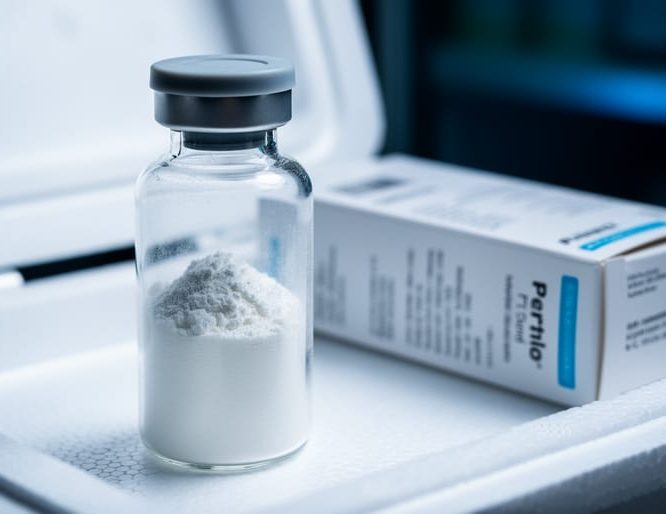
Keep lyophilized retatrutide for research use cold, dark, and dry, and you’ve done most of the work. Unopened vials generally belong in a refrigerator or freezer, tucked inside their original box away from light, with the cap sealed against humidity. It takes about five minutes to set up, and the only real skill is patience: don’t open, warm, or shuffle vials more than you must.
If you handle retatrutide for research use, the freeze-dried powder is stable precisely because it holds so little water. Heat, bright light, and stray moisture are what undo that, and each one is easy to control with a little care.
Think of it like storing a family recipe card or a jar of wildflower honey from the farm stand down the road. Treat it gently, keep it somewhere steady, and it rewards you. Our community has a saying: small habits protect big efforts.
Below you’ll find the supplies, the stop conditions that tell you when to pause, and clear steps for temperature, light, and moisture. Always follow your product label and the guidance of a qualified professional first.
Why Cold, Dark and Dry Matters for Freeze-Dried Peptides
Lyophilization is just a gentle way of freeze-drying. The peptide is frozen, then the water is slowly drawn off as vapor, leaving a dry, light powder in the vial. Water is what lets most molecules wiggle, react and break down, so with almost none of it around, a freeze-dried peptide holds together far longer than the same peptide dissolved in liquid.
Think of a local jam maker who tucks her preserves into a cool, shadowy pantry. The jar is sealed and sturdy, but she still wouldn’t leave it on a sunny windowsill or beside the stove. Freeze-dried peptides are similar. Stable doesn’t mean invincible, and three things can still wear them down:
– Heat speeds up the slow chemical changes that degrade the compound.
– Lightespecially strong sun or bright indoor lighting, can damage sensitive molecules.
– Humidity can sneak in as moisture or condensation and undo the very dryness that protects the powder.
Retatrutide is an investigational compound, so the storage instructions that come with your product matter most. Treat this section as general background, and let the label and your pharmacist or prescriber have the final say.
What You Need Before You Start: Tools and Materials
Good storage starts with a little preparation, and most of what you need is probably already in your home. Gather everything first so you’re never scrambling with a vial in your hand.
Here’s a simple checklist:
- The sealed vial, kept in its original packaging and label
- A reliable thermometer placed in your refrigerator or freezer space
- An opaque storage box or container to block light
- Desiccant packets to absorb stray moisture
- Labels and a permanent marker for dates and notes
- A clean work surface, plus clean gloves if you like
Set aside a dedicated spot in the fridge or freezer so the vial isn’t sharing space with open food or getting jostled around. A small thermometer is worth the few dollars, because the dial on the appliance doesn’t always match what’s happening on your shelf.
Where it makes sense, choose kindly for the planet too. A sturdy, reusable tin or a recycled-cardboard box works beautifully as a light shield, and a jar with a tight lid can be given a second life as your desiccant holder. Small, thoughtful choices like these keep your storage careful and gentle on the environment.
Safety Warnings and When to Stop and Ask for Help
Caring for a vial well also means knowing when to set it aside. These safeguards aren’t meant to worry you, only to keep you and the people around you safe.
Please don’t use a vial that looks discolored, has visible particles, or turns cloudy after reconstitution. A damaged seal or cracked glass is also a clear signal to stop. The same goes for anything that has been exposed to heat or left out for long stretches, since you can’t see what that did to it.
A few everyday habits help too. Never share vials, even with someone you trust, because storage history and handling matter. Keep everything out of reach of children and pets, ideally in a closed box on a high shelf or in a dedicated spot in the fridge.
One more gentle reminder: online storage tips, including this article, are general education and can’t replace guidance from your pharmacist, prescriber or the supplier’s label. If something feels off, or you simply aren’t sure, reaching out to them is an act of care. They would much rather hear from you early than have you guess.
Step-by-Step: Storing Lyophilized Retatrutide Correctly
Getting the Temperature Right
Most unopened lyophilized peptides do well in cold storage, and retatrutide is no exception. The general pattern people follow is refrigeration for short- to medium-term storage and a freezer for longer stretches. The catch is that your supplier’s label always comes first, because the right range depends on how that particular product was made and tested.
Think of it like a good jar of preserves: it’s not only how cold, it’s how steady. Put the vial toward the back of a middle shelf, away from the refrigerator door, which warms up every time someone grabs the milk. Avoid freeze-thaw cycles, and don’t move the vial in and out of the cold if you can help it. Wide temperature swings are harder on a peptide than a steady, slightly imperfect temperature.
Here’s a simple routine to follow from the moment it arrives:
- Read the label and any supplier instructions before anything else.
- Inspect the vial and seal on arrival for cracks, leaks or discoloration.
- Place it promptly in cold storage, away from the door.
- Shield it from light with its original box or an opaque container.
- Keep it dry by storing it with a desiccant packet.
- Label it with the date received.
- Log the temperature and check it regularly.
Travel and power cuts need a little planning. If you’re moving the vial, a small insulated bag with a cold pack works well, and our notes on shipping and packing cover keeping things steady in transit. During an outage, keep the door closed, and if the vial warmed up for an unknown time, set it aside and ask your supplier or pharmacist.
Keeping Light Away
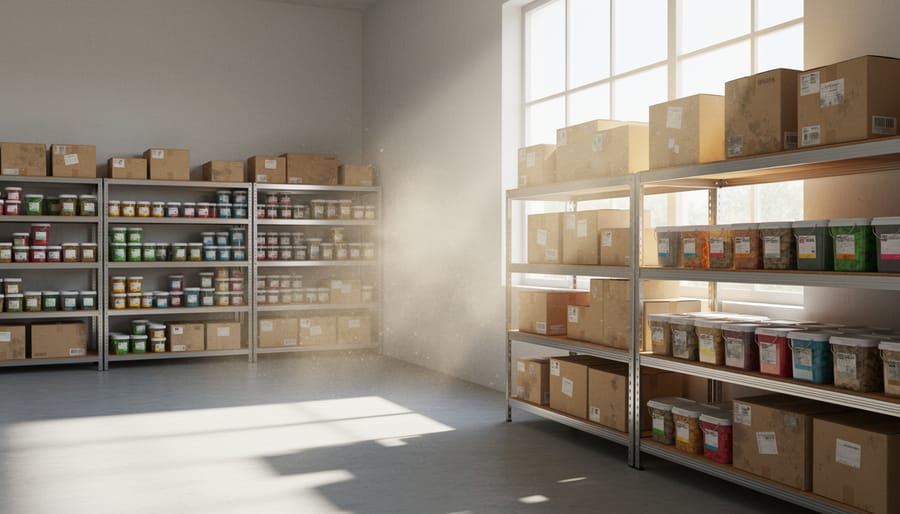
Light is a quiet troublemaker for sensitive compounds. Sunlight and even bright indoor lighting can gradually break down delicate molecules, and a freeze-dried peptide is no exception. The damage isn’t something you’d notice at a glance, which is why protection matters before there’s any sign of a problem.
I think of a small-batch olive oil maker I once met at a Saturday market. She kept every bottle in deep green glass and stacked her cases in the dimmest corner of her workshop. “Light takes the good things first,” she told me, and I’ve remembered it ever since. My grandmother did much the same, tucking her herbs and preserves in the back of a shaded pantry.
You can bring that same habit to your vial:
– Leave it in its original box whenever it’s in storage.
– If the box is damaged, use an opaque container, ideally a reused or recycled one.
– Choose a dark shelf or drawer, never a windowsill or a spot under bright lights.
Keep exposure brief whenever you need to check the label, and always follow the instructions that came with your product.
Guarding Against Moisture
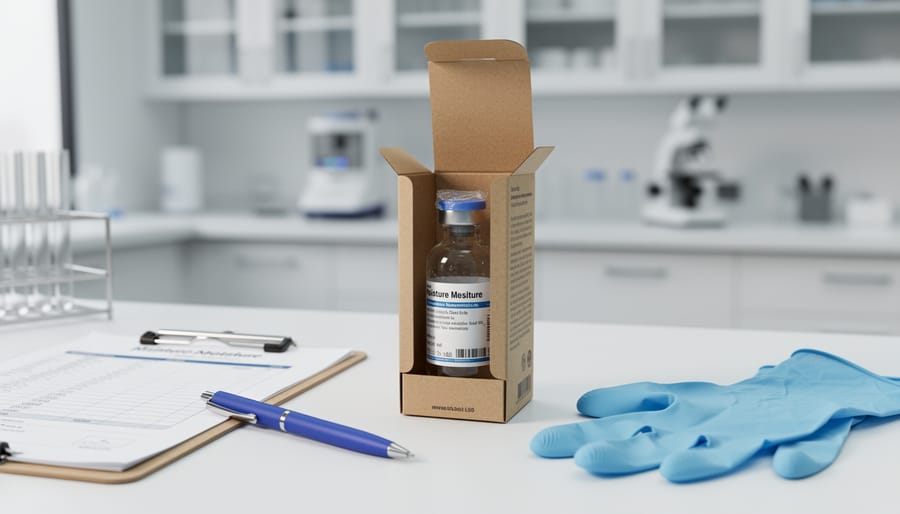
Moisture is the quiet troublemaker with freeze-dried peptides. Lyophilized material is dried on purpose, so even a little humidity can nudge it toward clumping or breaking down faster than it should. The simplest protection is also the easiest to forget: keep the vial sealed until you truly need it. An unopened stopper is a small, dependable barrier, and every extra opening invites damp air inside.
The sneakiest source of moisture is condensation. A vial straight from the fridge or freezer is cold enough to pull water out of the surrounding room air, and that water beads on the glass and can slip in the moment you open it. So give it time. Set the sealed vial on a clean surface and let it come up to room temperature before you open it, wiping away any droplets on the outside first. Patience here costs you nothing and protects what’s inside.
Desiccant packets are a lovely little helper. Tuck one or two into the container or box where the vial rests, and they’ll soak up stray humidity while it waits. Check that the packet is intact and keep it away from the stopper so nothing touches the vial’s seal. If you like keeping your supplies tidy and kind to the planet, you can reuse a clean, dry container, and a gentle look at a brand like Essentials by Nature may spark ideas for eco-minded storage touches around the home.
Finally, choose your spot with care. Steamy bathrooms and spots near the sink are the wrong place, since humidity and splashes follow you there. A steady, dry shelf in the fridge, away from the door, is a far better home. As always, the product label comes first.
Quick Reference: Temperature, Light and Moisture at a Glance
Here’s the whole picture in one glance. Think of it as a little reminder card to keep near your storage spot.
| Factor | What it risks | Simple habit |
|—|—|—|
| Temperature | Heat and swings in temperature can break down the peptide over time | Keep it cold, away from the fridge door, and avoid repeated freeze-thaw cycles |
| Light | Sunlight and bright indoor lighting can degrade sensitive compounds | Leave it in its original box or an opaque container, on a dark shelf |
| Moisture | Humidity and condensation can affect the freeze-dried material | Keep the vial sealed, add a desiccant packet, and skip bathrooms and sinks |
Each of these habits is small, and together they do a lot of quiet work. Cold, dark and dry, with the seal intact, is the whole idea.
One gentle reminder: the exact storage range for your vial comes from the product label and your supplier. If the label says something different from this table, follow the label, and check with a pharmacist or prescriber if you’re unsure.
How to Check Your Storage Is Working and What to Do Next
A good storage routine only works if you check on it. Once a week, glance at your thermometer and note the reading. If the number drifts outside the range on your supplier’s label, adjust the setting or move the vial to a steadier spot, and write down what happened.
Next, look at the vial itself. Freeze-dried material should look the way it did when you received it, so notice any change in color, any clumping or shrinking, or any moisture inside the glass. Confirm the seal is intact and the glass has no cracks. A simple log helps here: jot the date, the temperature, and a quick “looks the same” or “something changed.” Small habits like this are a quiet form of wellness promotion the everyday carefulness that looks after ourselves and the people around us.
If anything seems off, set the vial aside, don’t use it, and reach out to your supplier or a pharmacist. Asking is always the kind choice.
When a vial can’t be used, please don’t toss it in the household trash or pour anything down the drain. Ask your local pharmacy whether they accept returns, or check your municipality’s hazardous-waste or medication take-back program. Following local guidance keeps our shared water and neighborhoods a little healthier.
Common Questions About Storing Lyophilized Retatrutide
Here are some of the questions readers ask most often, with plain answers. The supplier’s label always has the final say, so check it first.
How long can lyophilized retatrutide be stored, and can it go in the freezer?
Shelf life depends on the supplier’s labeling and the batch’s expiry or retest date, so use that rather than a general rule. Many freeze-dried peptides are kept refrigerated or frozen when sealed, but only follow the temperature your label specifies.
Is room temperature ever okay, and what if the vial was left out?
Some labels allow brief room-temperature periods, such as during shipping, while others don’t, so look for that wording. If a vial sat out longer than the label permits, or in heat or sunlight, set it aside and ask your pharmacist or the supplier before using it.
Does the vial need to stay in its original box?
Keeping it in the original box is a simple way to block light and keep the label and lot details close by. If the box is gone, an opaque container in a dark spot does the same job.
Does storage change after reconstitution?
Yes, it usually does, because a mixed solution is generally less stable than the dry powder. Follow the supplier’s or your prescriber’s instructions for storage and use-by timing, and don’t guess.
If your situation isn’t covered here, a quick call to your pharmacist is always a kind thing to do for yourself.
Keeping lyophilized retatrutide in good shape comes down to a few steady habits: keep it cold, keep it dark, keep it dry, and keep it sealed until the moment you truly need it. None of it is complicated, but all of it matters. Above everything else, let the product label and your pharmacist or prescriber guide the details, because their word outweighs any general tip you’ll read online, including this one.
There’s something quietly lovely about this kind of care. Putting a vial in the right spot, jotting a date on a label, checking the thermometer once in a while: these are small acts, easy to overlook. Yet they’re one way we look after ourselves and the people we love, and that’s worth doing well.